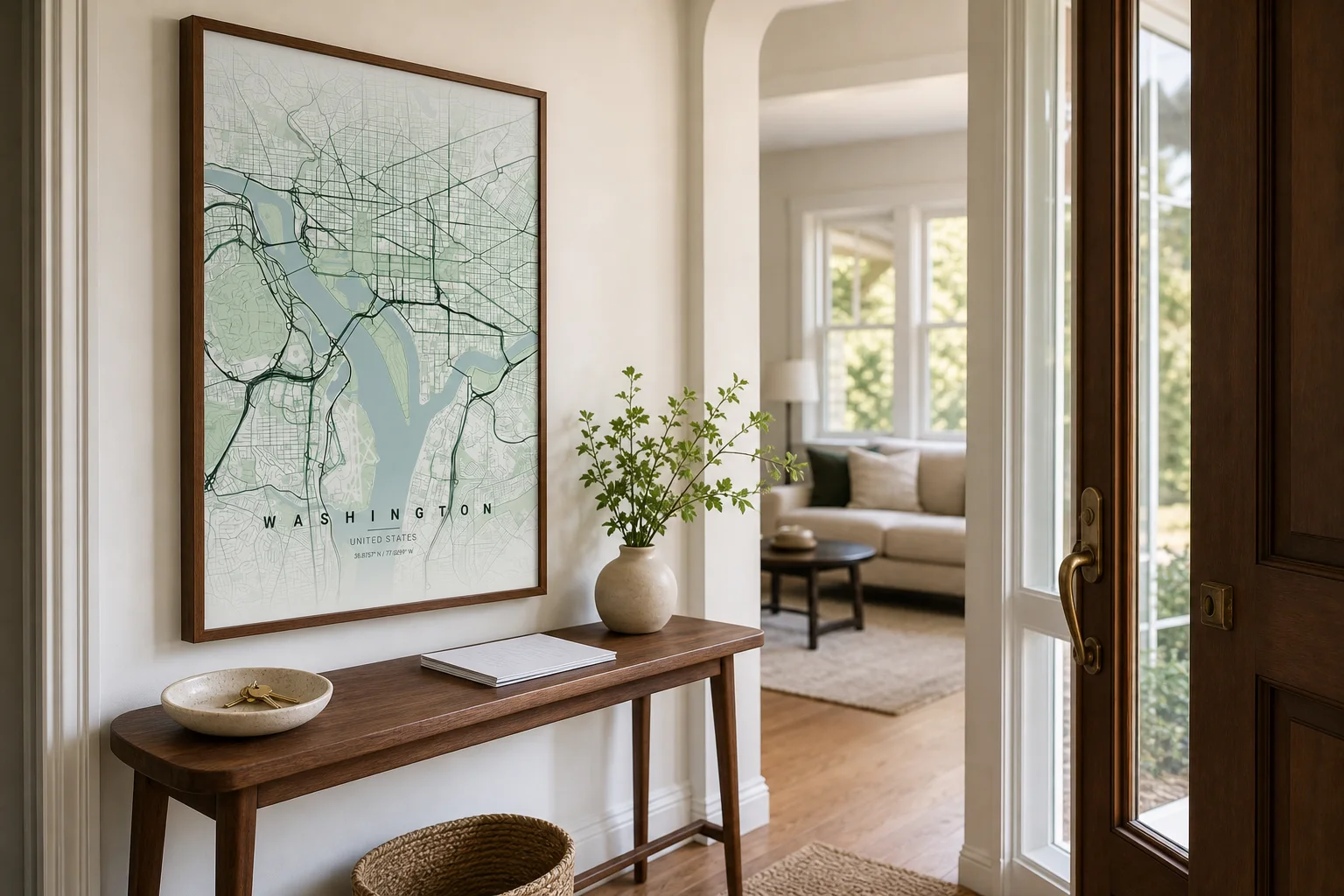
Bottom line: Center the gift on the new neighborhood, then keep the design quiet enough to belong in the home.
Why it works: The map is personal to the buyer without depending on taste-specific slogans or decorative themes.
Try this: Confirm the address, choose a useful neighborhood radius, and select the frame from materials already visible in the property.
A closing gift arrives at an unusual moment. The buyer has completed a complicated process, but the home may still feel theoretical: rooms are empty, keys are new, and familiar routines have not formed.
A neighborhood map acknowledges the actual place they chose. It can be personal without becoming overly intimate, and it can remain in the home long after the first box is unpacked.
Map the neighborhood, not only the city
Begin with the exact address and decide how much surrounding context matters. A tight crop can show nearby streets, parks, water, and the route toward the local center. A broader crop is better when the property’s relationship to the full city is part of its appeal.
The home does not need to be marked with a large symbol. A subtle pin can work, but the location can also remain private while the neighborhood pattern carries the meaning.
Use what you know about the interior
Real-estate photographs, a final walk-through, or the materials visible at closing provide enough information to make a considered choice.
The Washington foyer above pairs a forest map with walnut, warm white walls, brass hardware, and a woven runner. The piece feels settled because its frame and palette repeat materials already in the entry.
When information is limited, choose a restrained treatment:
- warm beige or monochrome for light neutral interiors;
- forest for homes with timber and natural textiles;
- blueprint for crisp modern or architecture-led spaces;
- terracotta for warm plaster, brick, leather, or walnut.
Avoid matching the brokerage’s brand colors unless they genuinely suit the home. The gift belongs to the buyer.
Keep the text useful and short
The city or neighborhood name, country, and coordinates are usually sufficient. A discreet move-in date or short subtitle can add context. Long congratulatory messages make the artwork harder to live with and are better placed in a card.
Before ordering, confirm spelling and the exact location. A personalized piece is only thoughtful when the personal details are correct.
Present it for the next room, not the closing table
A framed print is ready to hang, but an unframed format can be appropriate if the buyer has a strong interior style and may want to choose the finish. If you frame it, select a common, adaptable material and include the outer dimensions.
The most useful closing gifts do not need to prove their value at the moment they are handed over. They become valuable by fitting naturally into the new home and continuing to mark the address as life gathers around it.
Create a neighborhood map only after the address and final presentation are confirmed.