Bottom line: Map the city as it was lived, not simply as it appears on a list of destinations.
Why it works: Streets and routes recall the routines that turned an unfamiliar place into a temporary home.
Try this: Center the map between the residence and the part of the city visited most often, then choose a radius that keeps both visible.
A semester in another city is remembered through ordinary movement as much as landmarks. The walk to class, the late bus home, the inexpensive café, and the route used when visitors arrived slowly build a private version of the place.
Photographs capture moments. A map can hold the relationship between them.
Draw the geography of daily life
Begin with the address where the semester was lived. Then identify the places that shaped the routine: campus, studio, workplace, park, market, or the neighborhood where friends gathered.
Choose a radius that keeps the important connections visible. A map of the entire region may lose the streets that became familiar. A block-level crop may omit the journey that made the city feel large at first and manageable later.
If one repeated walk defined the experience, a GPX route can turn that routine into a subtle line across the map.
Choose the mood that belongs to the memory
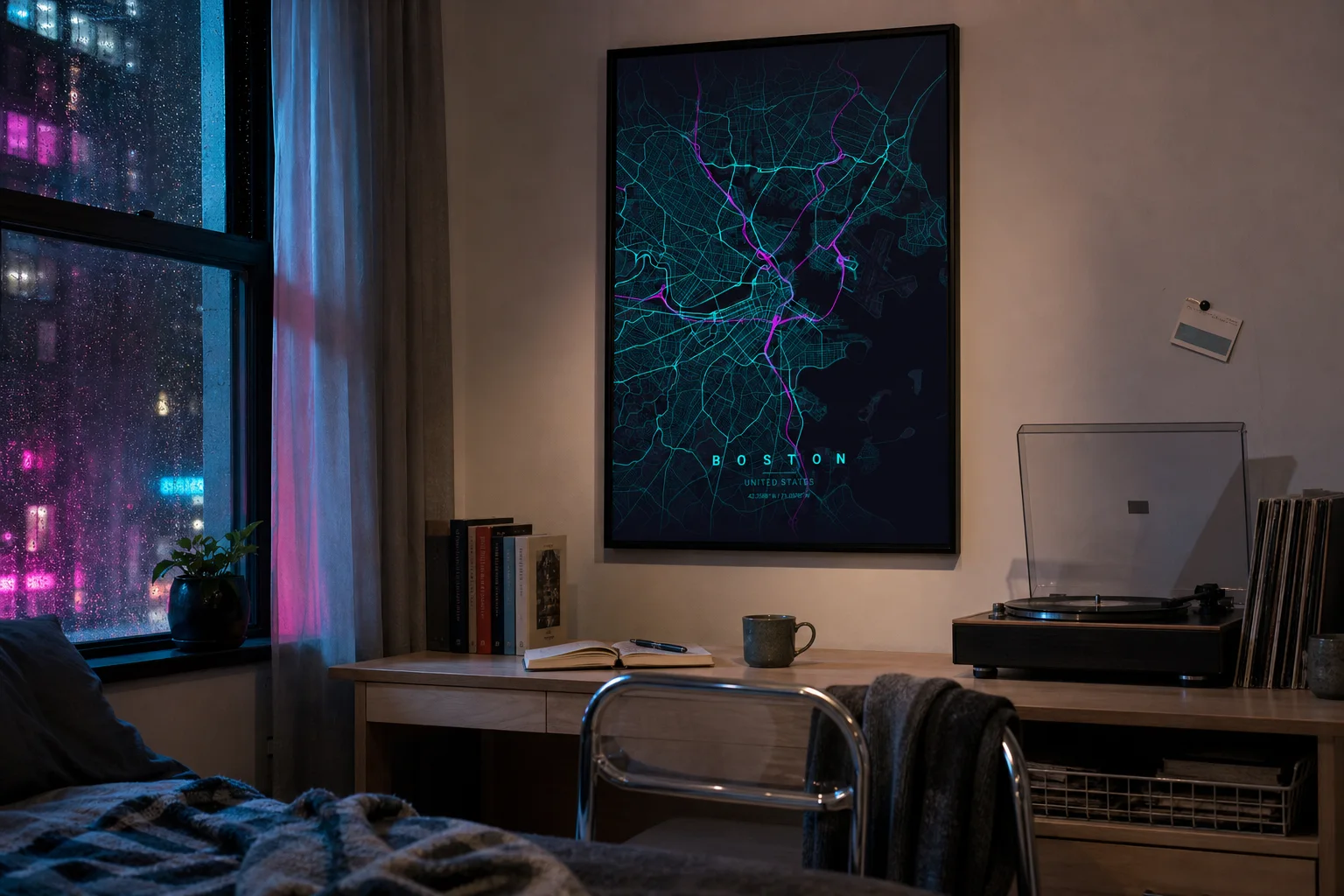
The Boston room above uses a neon map against a rainy evening. It suits a semester remembered through late study sessions, music, transit, and the excitement of an unfamiliar city after dark.
Another experience may call for warm beige, terracotta, forest, or a quiet monochrome. Do not choose a theme because it seems youthful. Choose it because it matches the atmosphere of the semester and the room where the poster will live now.
Edit the text with restraint
The city name, country, coordinates, and semester dates are often enough. A short subtitle can name the institution or neighborhood. Avoid turning the poster into a complete travel diary.
Meaning can live outside the print. A small transit card, notebook, or book nearby can carry the personal details while the wall remains composed.
Design it for the next home
A study-abroad poster may begin in a dorm and later move into a first apartment. Use a standard print format and a durable frame that can travel. Black metal works with a graphic map and changing furniture; oak softens a lighter palette.
For a graduation gift, confirm the host city, dates, and preferred spelling. If possible, ask about the neighborhood rather than centering the map on a tourist landmark by default.
The best version does not say, “I visited this city.” It quietly shows that the city became navigable, familiar, and part of the person who came home.
Create the semester map while the everyday routes can still be named.